



From Inside Diet
Please read this first. This article is for education and general information only. It is not medical advice, and it is not meant to diagnose, treat, cure, or prevent diabetes or any other condition.
Talk with your doctor, or with a registered dietitian or a diabetes care and education specialist, before you make a big change to how you eat. If you take insulin or a sulfonylurea (or another medicine that can lower blood sugar), eating fewer carbohydrates than usual can cause hypoglycemia (low blood sugar). Check your blood sugar as your care team has taught you, and follow their plan if it runs low.
If you have type 2 diabetes, every meal can feel like a test. It does not have to be. Food can help you manage blood sugar — not as a cure, and not as a single rigid diet, but as a set of habits you can use at a regular table.
There is no one eating plan that works for everyone with diabetes. The American Diabetes Association is clear about that. The reliable guidance does agree on a practical picture: non-starchy vegetables at the center of the plate, lean protein, quality carbohydrates in a sensible portion, less added sugar, and unsweetened drinks.
This guide walks through those habits, with a sample day and a free 7-day meal plan at the end.
Start with the plate, not a perfect diet
The easiest place to begin is the Diabetes Plate Method, used by the ADA, the CDC, and the NIDDK. You do not have to count anything to use it.
- Start with a 9-inch plate — about the length of a business envelope, as the CDC puts it.
- Fill half with non-starchy vegetables: broccoli, greens, peppers, tomatoes, cucumbers, green beans, zucchini, cauliflower, carrots, or cabbage.
- Fill one quarter with lean protein: chicken or turkey without the skin, fish, eggs, or tofu.
- Fill one quarter with quality carbohydrates: beans, lentils, brown rice, oats, whole-wheat bread, a small sweet potato, or fruit.
- Drink water, unsweetened tea, or another unsweetened low-calorie drink.
That quarter-plate is the portion that usually affects blood sugar the most. The ADA describes the Diabetes Plate as a visual way to follow a lower-carbohydrate meal pattern, and as a framework you can adjust if your care team recommends a different style of eating.
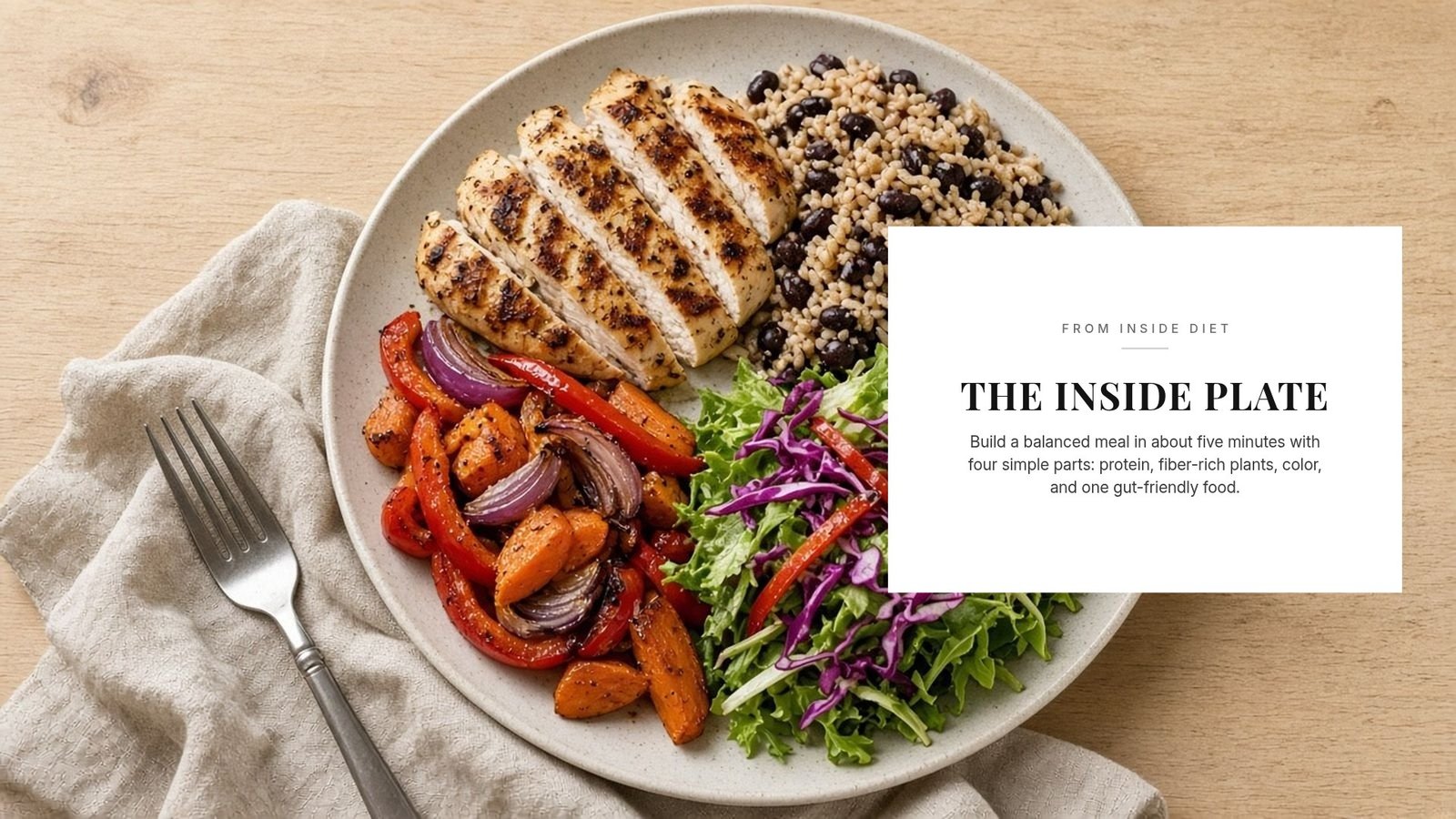
At Inside Diet, we also use the Inside Plate: protein, fiber-rich plants, color you can actually see, and one gut-friendly food, such as yogurt or a prebiotic food like oats, onions, garlic, or beans. The Diabetes Plate tells you how much. The Inside Plate helps you make sure the meal is complete.
Carb basics: quality, portion, and consistency
Carbohydrates raise blood sugar. That is not a reason to fear them. The CDC notes that carbs can be part of a healthy diet for people with diabetes. The work is in choosing them well, portioning them, and — for many people — keeping the amount fairly steady from meal to meal.
Quality. Fiber-rich, less processed carbs — whole grains, beans, lentils, starchy vegetables, and whole fruit — raise blood sugar more slowly than sugary drinks, sweets, white bread, and white rice. Fiber does not spike blood sugar the way other carbs can.
Portion. A quarter of a 9-inch plate is a practical starting point. If you count carbs, the CDC describes one carb serving as about 15 grams, often smaller than people think. How many servings belong on your plate is something to set with a registered dietitian. There is no one-size-fits-all number.
Consistency. Eating about the same amount of carbs at each meal can help keep blood sugar steadier. A tiny breakfast and a very large dinner makes numbers harder to predict. If you use an insulin pump or take mealtime insulin, your team may match your dose to what you eat instead.
Pairing. Eating carbs with protein, fat, or fiber slows how quickly blood sugar rises. Fruit with yogurt is a different experience from juice on its own. Beans and lentils offer protein and fiber, and they also count as carbohydrate foods — so if a meal already has a real portion of beans, you usually do not need rice as well.
What about low-carb versus a more moderate plate?
You will hear strong opinions on this. Some people do well with a lower-carb pattern. Others do well with a Mediterranean-style, vegetarian, or DASH-style pattern that includes more grains, fruit, and beans. The ADA’s review of meal patterns includes all of these, and says there is not one plan that manages diabetes for everyone.
In that review, a low-carbohydrate pattern is about 26 to 45 percent of calories from carbohydrate. A very-low-carbohydrate pattern is under 26 percent, often with a goal of 20 to 50 grams of non-fiber carbohydrate a day. Those are options some people use with their care team — not the only options, and not what the sample day or the 7-day plan below follow. Those meals use the Diabetes Plate: quality carbs are present, in a modest quarter of the plate. If your care team has already given you a carb target, follow that.
Fiber, drinks, and a few smart swaps
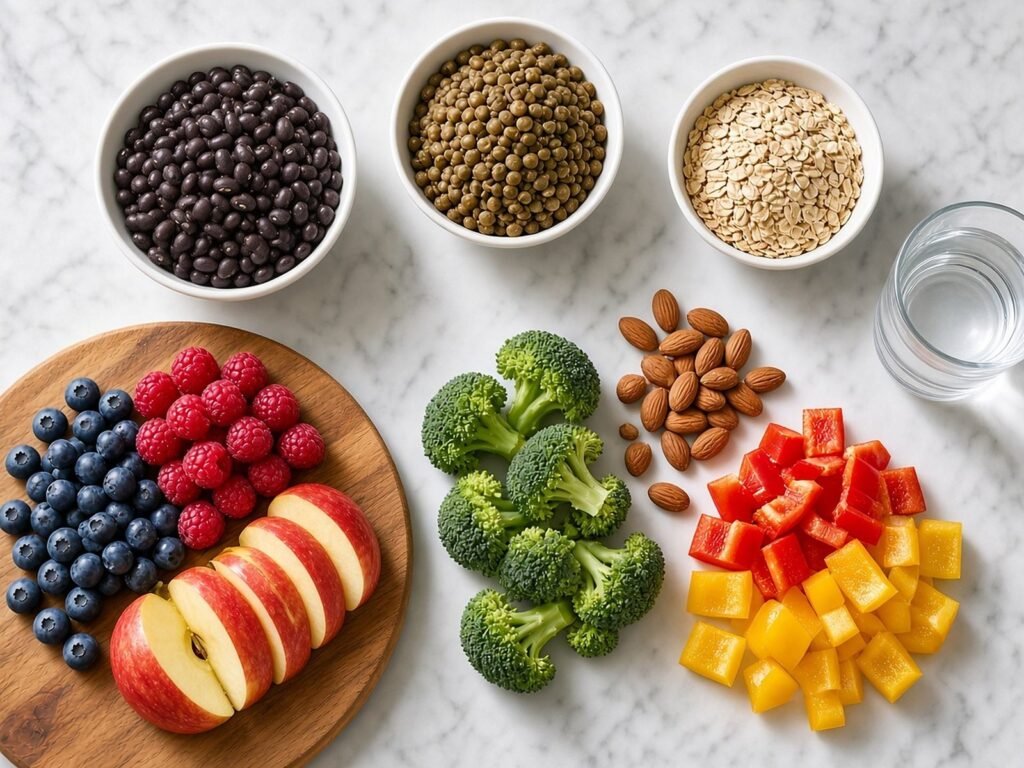
Fiber is one of the most useful tools on the plate. The CDC says it can help with blood sugar and weight management, and may help protect the heart. Most adults get only about half of what they need. The Dietary Guidelines figure the CDC cites is 22 to 34 grams a day, depending on age and sex. Add fiber gradually — oats, beans, vegetables on half the plate — and drink water as you do.
Drinks. Regular soda, sweet tea, juice, sports drinks, and flavored coffee drinks add a lot of fast carbohydrate without filling you up. The CDC recommends water as the default. The NIDDK lists water, unsweetened tea or coffee, and sparkling water as drinks with little or no added sugar. Whole fruit is a better choice than juice, even 100 percent juice, because you keep the fiber. If you drink alcohol, the NIDDK advises eating food at the same time and checking your blood sugar after, especially if you take insulin or certain other medicines, because alcohol can make blood sugar drop too low.
Smart swaps: plain unsweetened yogurt with berries instead of a sweetened dessert, especially if sugar cravings are the hard part; sparkling water or unsweetened tea instead of soda; a quarter-plate of beans or brown rice instead of a heaping bowl of white rice; whole-wheat bread with whole-wheat flour listed first (the CDC notes that some loaves only look like whole wheat); and natural peanut butter and salsa with no added sugar.
Meal timing, and a short walk after eating
When you eat can matter, especially if you take medicine. The NIDDK says the best times for meals and snacks depend on your medicines, your activity, and your schedule. Skipping or delaying a meal can cause low blood sugar if you take insulin or a sulfonylurea. Ask your team how to time food around your day.
A short walk after meals is one habit worth asking about. In a 2016 crossover study of 41 adults with type 2 diabetes, advice to walk for 10 minutes after each main meal was compared with advice to walk for 30 minutes at one time of day. Walking after meals was linked to a smaller rise in blood sugar after eating (the after-meal glucose area was about 12 percent lower), with a clearer difference after the evening meal. A 2023 systematic review found that exercise after eating had a greater short-term effect on after-meal blood sugar than exercise before eating. That review included only eight small trials — 47 of the participants had type 2 diabetes — and the authors rated the risk of bias as high, so this is encouraging, not settled.
If you try it, keep it gentle. Talk with your health care professional first, and check your blood sugar as advised. Physical activity often lowers blood glucose and can keep lowering it for hours, especially if you take insulin or a sulfonylurea. Inside Diet’s guide to walking is a useful companion, not a substitute for your diabetes care plan.
How to read the label without getting lost
On packaged foods, start with the serving size. Every other number is for that amount. If you eat two servings, you get two times the carbohydrate.
Then look at Total Carbohydrate. The ADA explains that this number already includes sugar, starch, and fiber. Use that total if you are counting. Added sugars are listed separately so you can tell sugars put in during processing from those that occur naturally in fruit or milk. You do not add that line on top of the total. Dietary fiber is worth seeking out: “high fiber” means 5 grams or more per serving, and “a good source” means 2.5 grams or more, according to the ADA.
Skip the marketing language around “net carbs” or glycemic index on the front of the box. The ADA notes that those terms have not been defined by the FDA, and the association does not recommend using them. Check total carbohydrate, and use your own blood sugar readings to see how a food affects you.
A simple sample day
Here is what those ideas look like on an ordinary Monday, for one adult, on a 9-inch plate. This is a sketch, not a prescription.

Breakfast: Yogurt Berry Bowl. Plain unsweetened Greek yogurt, a modest scoop of oats, berries, a few nuts, and cinnamon.
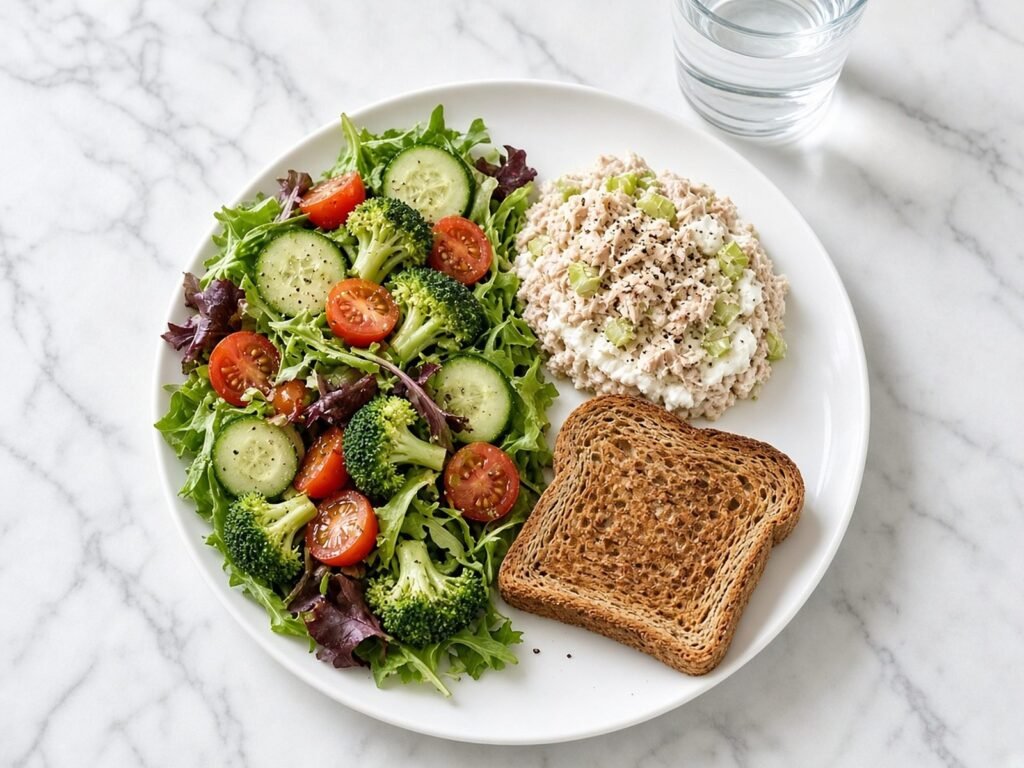
Lunch: Tuna Salad Plate. Tuna mixed with plain yogurt and lemon, a generous bed of greens, cucumber, and tomato, and one slice of whole-wheat toast.
Snack: Apple and Almonds. A small-to-medium apple and a small handful of almonds, with water.
Dinner: Lemon Chicken Tray. Chicken, a half-plate of roasted broccoli, zucchini, onions, and carrots, a quarter-plate of brown rice, and a spoon of yogurt-herb sauce.
Drink water, or unsweetened tea or coffee, at each meal. If your provider agrees, try a 10-minute walk after dinner.
That Monday is Day 1 of Inside Diet’s free 7-Day Type 2 Diabetes Meal Plan: breakfast, lunch, dinner, and a snack for seven days, with leftovers, a grocery list for two, Sunday prep, and swaps. Every lunch and dinner follows the Diabetes Plate and the Inside Plate. Get the free 7-day plan.
A few questions people ask
Can I still eat fruit? Yes. Fruit is a carbohydrate food, and it also brings fiber, vitamins, and minerals. The ADA encourages whole fruit as a way to satisfy a sweet tooth without added sugar. Put it in the quality-carb quarter, or pair a modest portion with protein, rather than drinking juice.
Do I have to cut out all carbs? No. The CDC says carbs can be part of a healthy diabetes diet, and the ADA lists several eating patterns — including ones with grains, fruit, and beans — that can help people manage diabetes. A very-low-carb plan is one option some people use with professional support. It is not a requirement.
Do I have to count every gram? Not necessarily. The NIDDK notes that if you are not taking insulin, you may not need to count carbs when you use the plate method. If you take mealtime insulin, counting can help you match your dose. The 7-day plan is built on the plate, not on a gram target.
What if I take insulin or other diabetes medicine? Do not make a big change on your own. Eating fewer carbs, skipping a meal, drinking alcohol, or adding more walking can all lower blood sugar. Check your blood sugar as you have been taught, and follow your care team’s plan for treating lows.
Can food cure type 2 diabetes? No, and nothing in this article is a promise of a cure. Food, activity, sleep, medicine, and regular care can help you manage blood sugar. Results vary. Be wary of anyone who says otherwise.
Medical disclaimer
The content on Inside Diet, including this article and any related meal plan, is for education and general information only. It is not medical advice, and it is not intended to diagnose, treat, cure, or prevent any disease or condition.
Food needs vary from person to person. Please talk with your doctor, or with a registered dietitian or a diabetes care and education specialist, before you change your diet, start a meal plan, or start a supplement — especially if you take diabetes medication or insulin.
Eating fewer carbohydrates than you usually do, skipping or delaying a meal, or adding more physical activity can cause low blood sugar (hypoglycemia), particularly if you take insulin or certain other diabetes medicines, such as sulfonylureas. For many people, low blood sugar means a reading below 70 mg/dL, but your number may be different; ask your care team what is low for you.
Signs of low blood sugar can come on quickly and may include feeling shaky, sweaty, or clammy; a fast heartbeat; feeling nervous, anxious, irritable, or confused; dizziness or lightheadedness; hunger; weakness; blurred vision; a headache; or tingling in the lips, tongue, or cheeks. Severe low blood sugar can cause seizures or loss of consciousness and needs urgent help. Follow your care team’s plan for checking and treating low blood sugar. The only sure way to know is to check, as your provider advises.
Check your blood sugar as your health care provider has advised, especially when you change what you eat or how active you are. If you have symptoms that worry you, or a low you cannot bring up as your care team taught you, seek medical care.
Sources
- American Diabetes Association. Eating Well & Managing Diabetes.
- American Diabetes Association. Eating for Diabetes Management.
- American Diabetes Association. Reading and Understanding Food Labels.
- American Diabetes Association. Understanding Carbs.
- American Diabetes Association. Signs, Symptoms, and Treatment for Hypoglycemia.
- Centers for Disease Control and Prevention. Diabetes Meal Planning.
- Centers for Disease Control and Prevention. Choosing Healthy Carbs.
- Centers for Disease Control and Prevention. Fiber: The Carb That Helps You Manage Diabetes.
- Centers for Disease Control and Prevention. Carb Counting.
- National Institute of Diabetes and Digestive and Kidney Diseases. Healthy Living with Diabetes. Last reviewed October 2023.
- National Institute of Diabetes and Digestive and Kidney Diseases. Low Blood Glucose (Hypoglycemia). Last reviewed July 2021.
- Reynolds AN, Mann JI, Williams S, Venn BJ. Advice to walk after meals is more effective for lowering postprandial glycaemia in type 2 diabetes mellitus than advice that does not specify timing: a randomised crossover study. Diabetologia. 2016. doi: 10.1007/s00125-016-4085-2. PubMed.
- Engeroff T, Groneberg DA, Wilke J. After Dinner Rest a While, After Supper Walk a Mile? A Systematic Review with Meta-analysis on the Acute Postprandial Glycemic Response to Exercise Before and After Meal Ingestion in Healthy Subjects and Patients with Impaired Glucose Tolerance. Sports Medicine. 2023. doi: 10.1007/s40279-022-01808-7. PubMed.
