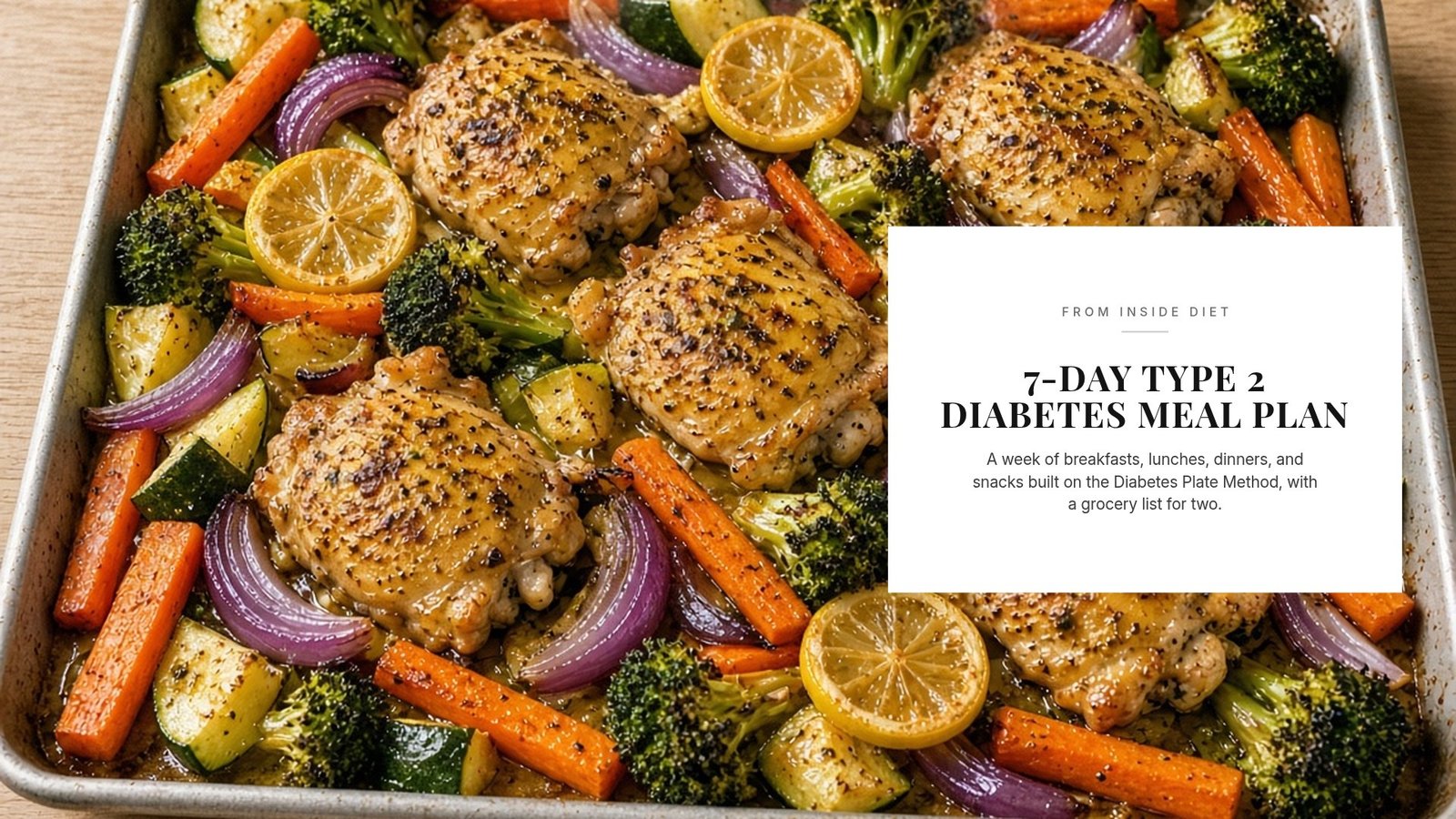
From Inside Diet
How to use this plan
This is a full week of breakfasts, lunches, dinners, and snacks for people living with type 2 diabetes — and for anyone who wants meals that are gentler on blood sugar. The recipes are everyday food from a regular grocery store. You do not need special products, and you do not need to count every gram unless your care team has asked you to.
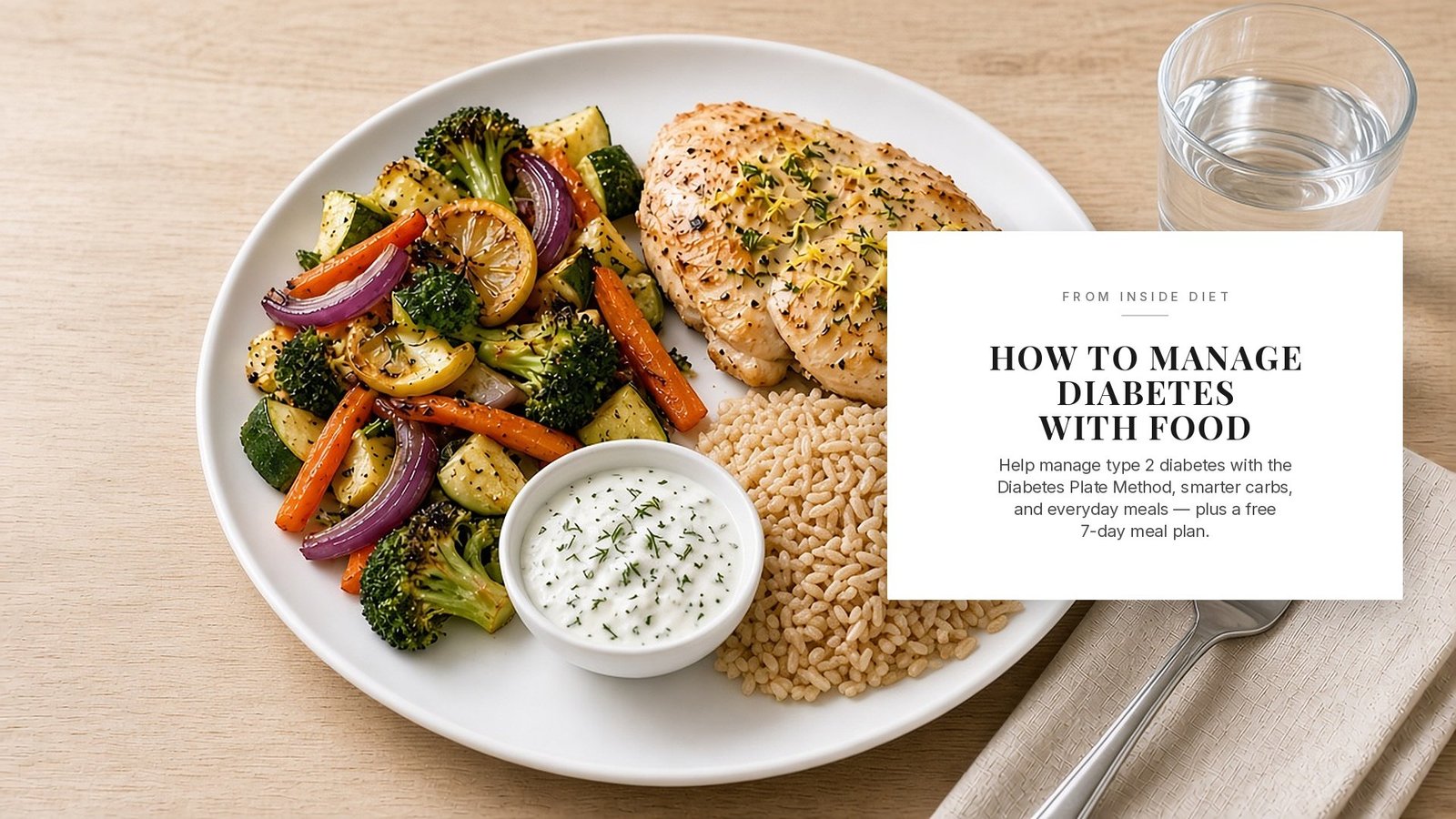
Every lunch and dinner is built on the Diabetes Plate Method, a simple picture used by the American Diabetes Association, the CDC, and the NIDDK:
- Start with a 9-inch plate.
- Fill half with non-starchy vegetables — broccoli, greens, peppers, zucchini, green beans, cabbage, tomatoes, cucumbers, and the like.
- Fill one quarter with lean protein — chicken, turkey, fish, eggs, tofu, or plain Greek yogurt.
- Fill one quarter with quality carbohydrates — beans, lentils, oats, brown rice, a small sweet potato, whole-wheat bread, or fruit.
- Drink water or another unsweetened drink with the meal.
Breakfasts follow the same idea in a bowl or on a smaller plate: protein first, a modest serving of quality carbs, and some color. Snacks pair a carbohydrate with protein, fat, or fiber, which slows how quickly blood sugar rises.
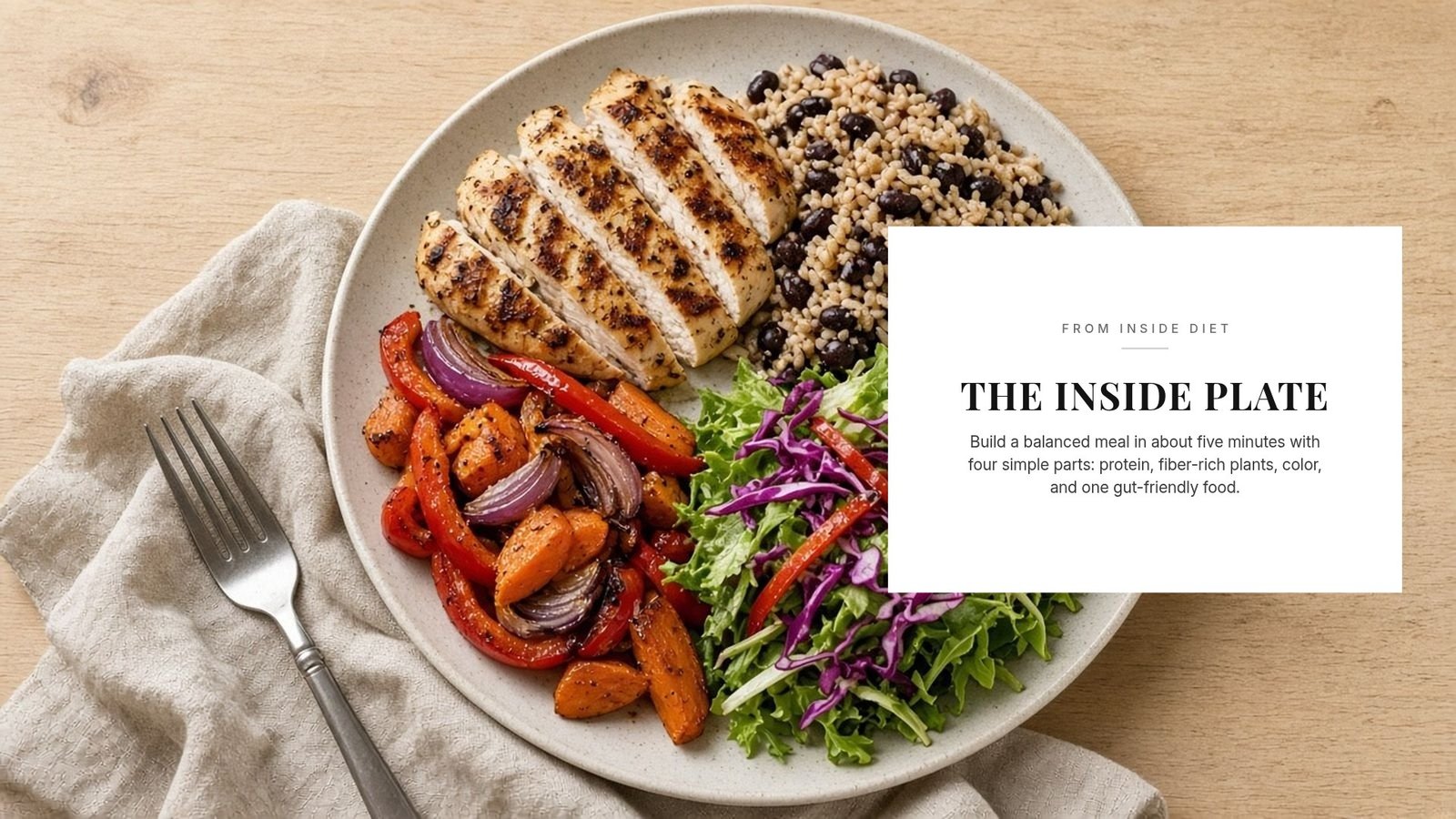
Every meal also follows the Inside Plate: protein, fiber-rich plants, color, and one gut-friendly food (yogurt, or a prebiotic food such as oats, onions, garlic, or beans). If you want the short method behind that, read The Inside Plate. This plan is that method, adjusted for type 2 diabetes.
Leftovers are planned on purpose. Monday's chicken becomes Tuesday's lunch and Thursday's soup. Tuesday's skillet becomes Wednesday's lunch. You cook a proper dinner most nights, and lunch mostly takes care of itself.
This is not a very-low-carb or keto plan, and it does not assign a gram target. The ADA and the CDC both say the right amount of carbohydrate is personal — there is no single number that fits everyone. If you already count carbs, use an insulin pump, or take mealtime insulin, take this plan to your registered dietitian or diabetes care and education specialist so the portions match your target.
Please read the medical disclaimer at the end before you start. Changing how you eat — especially eating fewer carbohydrates than you usually do — can lower blood sugar. If you take insulin or certain diabetes medicines, that can lead to hypoglycemia (low blood sugar). Talk with your doctor or a registered dietitian first, and check your blood sugar as your provider advises.
Before you start
- Shop once from the grocery list below. It is written for two people, with a note on how to scale it.
- Spend 30 to 60 minutes the day before — Sunday, if you are starting on Monday. The prep plan is later in this guide.
- Start on Day 1, even if that is not a Monday.
- Swap freely, as long as the plate stays in balance. Hate zucchini? Use green beans. No salmon this week? Use any mild white fish, or tofu. See the swap list at the end.
- Drink water through the day, and choose unsweetened tea or coffee if you want something else. Skip regular soda, juice, sweet tea, and flavored coffee drinks.
- Increase fiber gradually, and drink water as you do. Days 1 and 2 lean on cooked vegetables, yogurt, oats, and fruit. Beans show up in a moderate way on Day 2. Lentils come later in the week. If a sudden jump in fiber bothers your stomach, slow down and repeat an earlier day.
- Keep meal timing fairly regular. Eating about the same amount of carbohydrate at each meal can help keep blood sugar steadier. Do not skip meals if you take insulin or medicines that can cause low blood sugar, unless your care team has told you otherwise.
- A short walk after meals may help some people. See the tips box below, and ask your care team first if you take insulin or a sulfonylurea.
Tips for steady blood sugar
- Build lunch and dinner with the Diabetes Plate: half non-starchy vegetables, a quarter lean protein, a quarter quality carbs.
- Choose carbs with fiber — oats, beans, lentils, brown rice, whole-wheat bread, vegetables, and whole fruit — and keep the serving to about a quarter of the plate.
- Pair carbs with protein, fat, and fiber. Do not drink fruit juice with a meal in place of eating the fruit.
- Keep added sugar low. Use plain yogurt, unsweetened milk, salsa with no added sugar, and natural peanut butter. Season with lemon, herbs, cinnamon, and spices instead of honey or syrup.
- Try to keep the carb portion similar from one meal to the next, rather than a tiny breakfast and a very large dinner.
- Drink water or unsweetened tea or coffee. Sugar-sweetened drinks add fast carbs without leaving you full.
- If your provider agrees, a 10-minute walk after meals is a simple habit to try. Physical activity can also lower blood sugar, so check your levels as advised, especially if you take insulin or certain other medicines.
- Check your blood sugar as your care team has taught you, particularly when you change your meals.
Day 1 — A steady start
Suggested day: Monday
A calm first day: a yogurt bowl, a tuna plate piled with vegetables, and a big lemon-chicken tray that works hard for tomorrow and for Thursday's soup.
Breakfast: Yogurt Berry Bowl
Plain Greek yogurt with berries, a modest scoop of oats, and nuts. About 5 minutes.
Serves 2.
- 2 cups plain unsweetened Greek yogurt
- 1 cup blueberries or mixed berries, fresh or frozen (thawed)
- ½ cup rolled oats, divided
- 2 tablespoons chopped walnuts or almonds
- Cinnamon, to taste
Spoon the yogurt into two bowls. Top with berries, oats, nuts, and cinnamon. No honey or syrup is needed. The berries and cinnamon bring enough flavor.
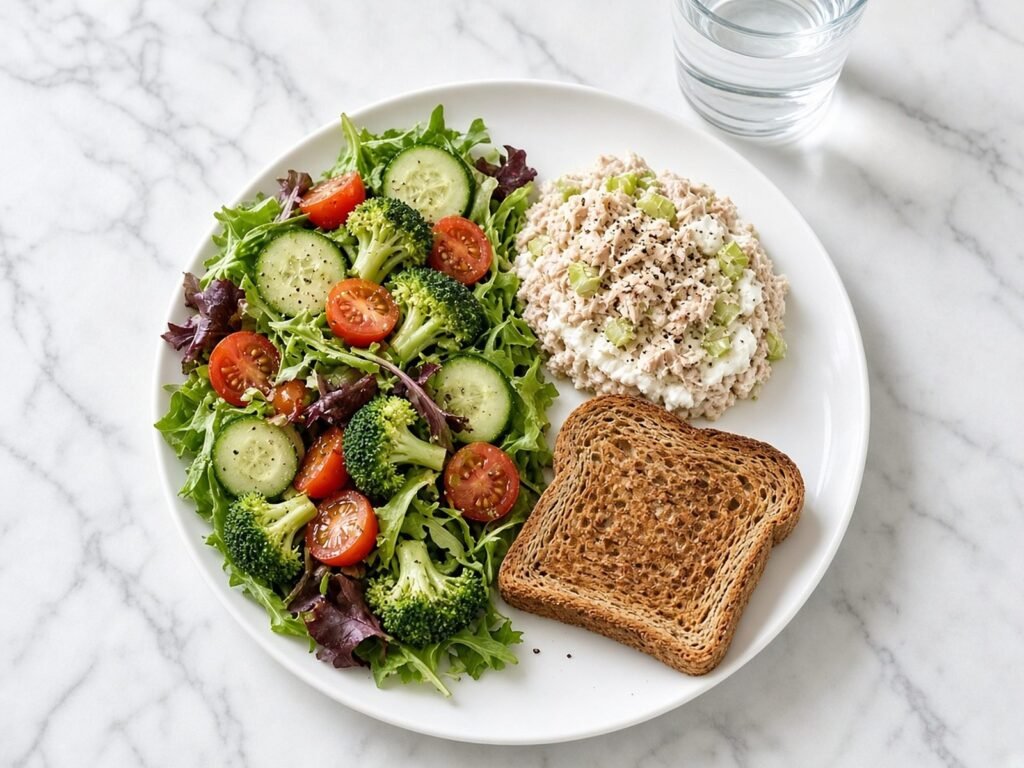
Lunch: Tuna Salad Plate
Tuna stirred with yogurt and lemon, served on a bed of greens, with one slice of toast. About 10 minutes.
Serves 2.
- 2 cans tuna in water, drained
- ½ cup plain unsweetened Greek yogurt
- Juice of ½ lemon
- 1 celery stalk, finely chopped (optional)
- Salt and black pepper
- 2 slices whole-wheat bread, toasted (one slice each)
- 4 handfuls mixed greens
- 1 cucumber, sliced
- 1 tomato, sliced, or a handful of cherry tomatoes
Stir the tuna with the yogurt, lemon, celery, salt, and pepper. Pile the greens, cucumber, and tomato on two plates so vegetables take up most of the space. Add the tuna and one slice of toast per person.
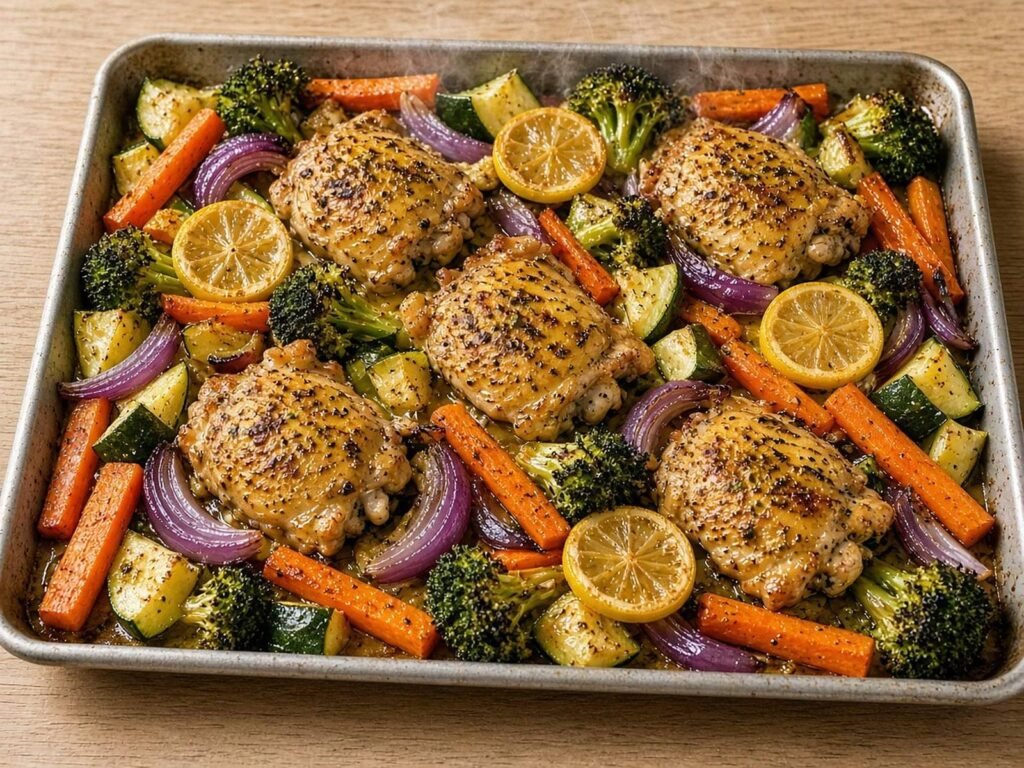
Dinner: Lemon Chicken Tray
Sheet-pan lemon-garlic chicken with a full tray of vegetables and a small serving of brown rice. About 15 minutes of hands-on time, 30 minutes in the oven.
Serves 2 tonight, plus leftovers. This is the most important cook of the week. You are making tonight's dinner, tomorrow's lunch, and the chicken for Thursday's soup.
- 3 lb boneless chicken thighs or breasts
- 1 large head broccoli, cut into florets, or 4 cups florets
- 4 medium zucchini, cut into chunks
- 2 yellow onions, cut into wedges
- 4 carrots, cut into thick sticks
- 4 garlic cloves, minced, plus a little extra for the yogurt sauce
- 3 tablespoons olive oil
- 2 lemons (juice and a few slices)
- Salt, black pepper, and 1 teaspoon dried oregano
- Cooked brown rice, from Sunday prep — a quarter of each plate tonight, not a heaping bowl
- Yogurt-herb sauce, from Sunday prep
Heat the oven to 425°F (220°C). Pat the chicken dry and toss it with 2 tablespoons of the oil, half the garlic, the juice of 1 lemon, oregano, salt, and pepper. Toss the broccoli, zucchini, onions, and carrots with the remaining oil, garlic, salt, and pepper.
Spread the vegetables on one sheet pan and the chicken on the other, or combine them if everything fits in a single layer. Tuck on a few lemon slices. Roast for 25 to 30 minutes, until the chicken is cooked through (the thickest piece should no longer be pink, and juices should run clear) and the vegetables are tender.
Serve two portions of chicken with plenty of the roasted vegetables — they should fill half the plate — a quarter-plate of brown rice, and a spoon of yogurt-herb sauce.
Pack for later: Refrigerate two chicken portions with a share of the roasted vegetables for Day 2 lunch. Shred or chop the remaining chicken, cool it, and refrigerate it in a covered container for Day 4 soup. Cool leftover rice and refrigerate it too.
Snack: Apple and Almonds
One small-to-medium apple each, plus a small handful of almonds. Drink a glass of water with it.
Inside Plate check: Protein from yogurt, tuna, and chicken; fiber-rich plants from oats, greens, vegetables, and rice; color from berries, tomato, and the tray vegetables; gut-friendly yogurt, onion, and garlic.
Day 2 — Eggs and a skillet
Suggested day: Tuesday
Eggs and vegetables in the morning, leftover chicken at lunch, and a turkey skillet that already holds tomorrow's lunch.
Breakfast: Veggie Egg Scramble
Eggs scrambled with spinach and peppers, one slice of toast, and a few berries on the side. About 15 minutes.
Serves 2.
- 4 eggs
- A large handful of spinach
- 1 bell pepper, diced
- 2 teaspoons olive oil
- 2 slices whole-wheat toast (one each)
- ½ cup berries, divided
- Salt and black pepper
- Optional: a few spoonfuls of plain Greek yogurt on the side
Cook the pepper in the oil for a few minutes, add the spinach until it wilts, then scramble in the eggs. Serve with one slice of toast and the berries. Keep the toast to one slice so the carb portion stays modest.
Lunch: Leftover Chicken Bowl
Yesterday's lemon chicken and vegetables, reheated, with extra greens. About 5 minutes to reheat.
Serves 2.
Reheat the reserved chicken and vegetables until they are steaming hot. Add a handful of fresh greens or cucumber, a quarter-plate of leftover brown rice (or skip the rice and add more vegetables if you prefer), and a spoon of yogurt-herb sauce. The plate should still look like a Diabetes Plate: vegetables first, then protein, then a modest carb.
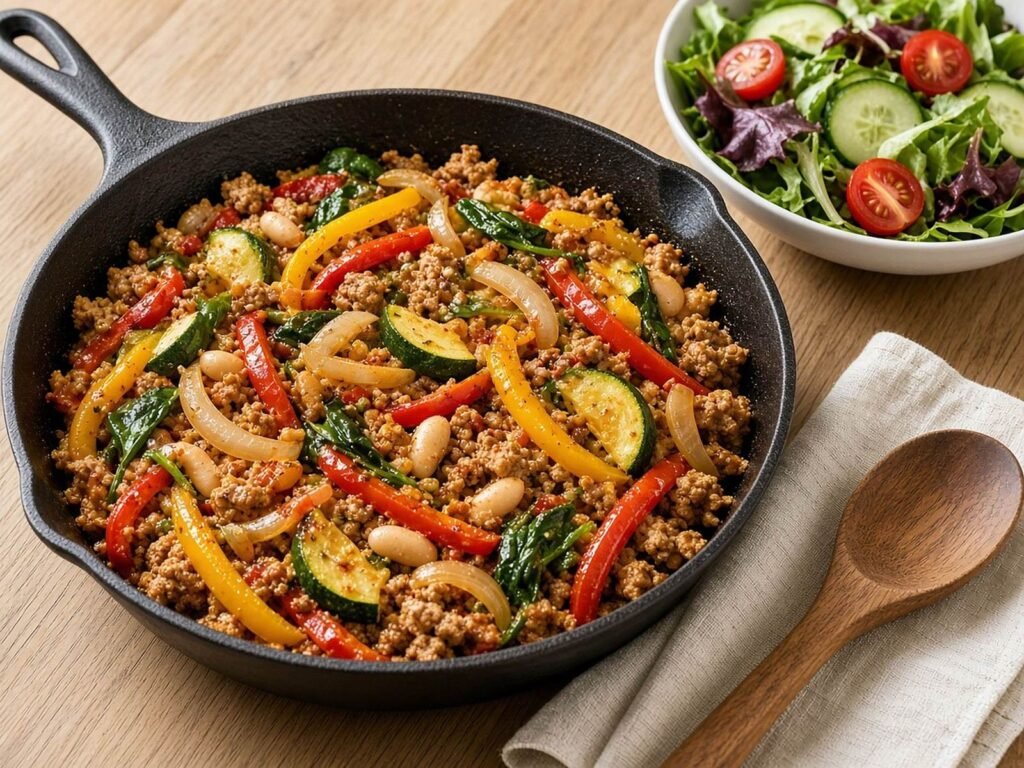
Dinner: Turkey Veggie Skillet
Ground turkey with peppers, zucchini, spinach, onion, and a modest scoop of white beans. About 25 minutes.
Serves 2 tonight, plus leftovers for tomorrow.
- 1 lb ground turkey
- 2 bell peppers, sliced
- 2 medium zucchini, chopped
- 1 yellow onion, sliced
- 3 garlic cloves, minced
- 1 tablespoon olive oil
- 1 can white beans (15 oz), rinsed and drained — use about half the can tonight, save the rest for the leftover lunch or the soup
- ½ teaspoon paprika
- ½ teaspoon ground cumin
- Salt and black pepper
- 4 handfuls spinach, stirred in at the end
- Lemon juice
- A big side salad of mixed greens, cucumber, and tomato, with Sunday's lemon dressing
- Optional: a small spoon of sauerkraut or yogurt on the side
Cook the onion, peppers, and zucchini in the oil until they soften. Add the garlic, then the turkey, and cook until the turkey is no longer pink. Stir in the beans, paprika, cumin, salt, and pepper. Fold in the spinach until it wilts. Finish with lemon.
Serve with a generous salad so non-starchy vegetables fill half the plate. The beans are tonight's quality carb — you do not need rice as well.
Pack for later: Refrigerate two portions for Day 3 lunch.
Snack: Celery Peanut Butter
Celery sticks with a tablespoon of natural peanut butter (no added sugar). A glass of water alongside.
Inside Plate check: Protein from eggs, leftover chicken, and turkey; fiber-rich plants from toast, beans, and plenty of vegetables; color from peppers, berries, and salad; gut-friendly yogurt, onion, garlic, and beans.
Day 3 — Oats and baked fish
Suggested day: Wednesday
A warm oat bowl, leftover skillet at lunch, and a simple baked-fish plate with a small sweet potato.
Breakfast: Berry Oat Bowl
Warm oats cooked with water or unsweetened milk, topped with berries, yogurt, and cinnamon. About 10 minutes.
Serves 2.
- ⅔ cup rolled oats (a modest ⅓ cup dry oats each)
- About 1½ cups water or unsweetened milk
- 1 cup berries
- 1 cup plain unsweetened Greek yogurt, divided
- 2 tablespoons chopped nuts
- Cinnamon, to taste
- Optional: ½ small banana, sliced and shared — or skip it and use extra berries
Cook the oats until creamy. Divide into two bowls and top with yogurt, berries, nuts, and cinnamon. The yogurt is your protein; the oats and fruit are your quality carbs. If you add banana, keep it to a few slices so the bowl does not turn into two carb servings stacked together.
Lunch: Leftover Turkey Skillet
Yesterday's turkey and vegetables, reheated, with a fresh side salad. About 5 minutes to reheat.
Serves 2.
Reheat until steaming hot. Add a fresh handful of greens and a squeeze of lemon. If you saved extra beans, you can add a spoonful; if the skillet already has beans, you do not need bread or rice on the side.
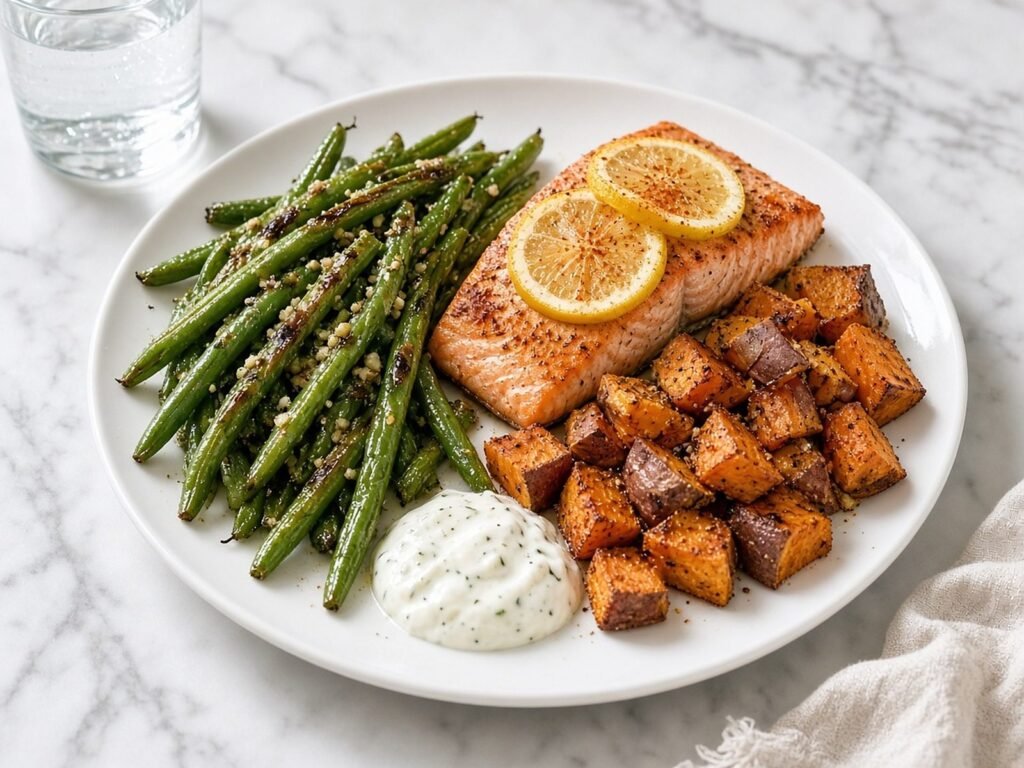
Dinner: Baked Fish Plate
Baked fish with a half-plate of green beans, and a quarter-plate of roasted sweet potato. About 25 minutes.
Serves 2 tonight, plus leftovers for tomorrow's lunch.
- 1½ lb salmon or any mild white fish (cod, tilapia, or pollock), fresh or frozen and thawed
- 1½ lb green beans, trimmed
- 2 medium sweet potatoes, cut into cubes (skins on)
- 2 tablespoons olive oil, divided
- 1 lemon, sliced, plus extra juice
- 2 garlic cloves, minced
- Salt, black pepper, and paprika
- Yogurt-herb sauce or a dollop of plain yogurt
Heat the oven to 425°F (220°C). Toss the sweet potato with 1 tablespoon oil, salt, and paprika, and roast for 10 minutes. Toss the green beans with the remaining oil, garlic, salt, and pepper. Push the sweet potato to one side, add the green beans and the fish, and top the fish with lemon slices. Roast another 12 to 15 minutes, until the fish flakes easily and the vegetables are tender.
Fill half of each plate with green beans, a quarter with fish, and a quarter with sweet potato. Add yogurt sauce and a squeeze of lemon.
Pack for later: Refrigerate two portions of fish and green beans for Day 4 lunch. Pack a little leftover sweet potato, or leave it if you would rather add extra greens tomorrow.
Snack: Carrots and Hummus
Carrot sticks with a few spoonfuls of hummus. Water with it.
Inside Plate check: Protein from yogurt, turkey, and fish; fiber-rich plants from oats, beans, green beans, and sweet potato; color from berries and the orange and green on the dinner plate; gut-friendly yogurt, oats, onion, and garlic.
Day 4 — Soup for two days
Suggested day: Thursday
Overnight oats waiting in the fridge, leftover fish at lunch, and a gentle chicken-and-vegetable soup that becomes Friday's lunch.
Breakfast: Berry Overnight Oats
Oats soaked overnight with yogurt and berries. About 5 minutes the night before, and no cooking in the morning.
Serves 2.
- ⅔ cup rolled oats
- 1 cup plain unsweetened Greek yogurt
- ¾ to 1 cup unsweetened milk, enough to loosen
- 1 cup berries
- 2 tablespoons nuts or seeds (chia or chopped walnuts)
- Cinnamon, to taste
The night before, stir the oats, yogurt, milk, and cinnamon, and divide into two jars. In the morning, top with berries and nuts. If it is thicker than you like, add a splash of unsweetened milk.
Lunch: Leftover Fish Salad
Cold or gently reheated leftover fish on a big salad, with any remaining green beans. About 10 minutes.
Serves 2.
Flake the leftover fish over mixed greens, cucumber, tomato, and leftover green beans. Add lemon dressing and a spoon of yogurt. If you saved a little sweet potato, add a modest portion; if not, the meal is still complete with a small piece of fruit or a few extra beans. Keep any leftover sweet potato or fruit to a quarter of the plate, not both in large amounts.
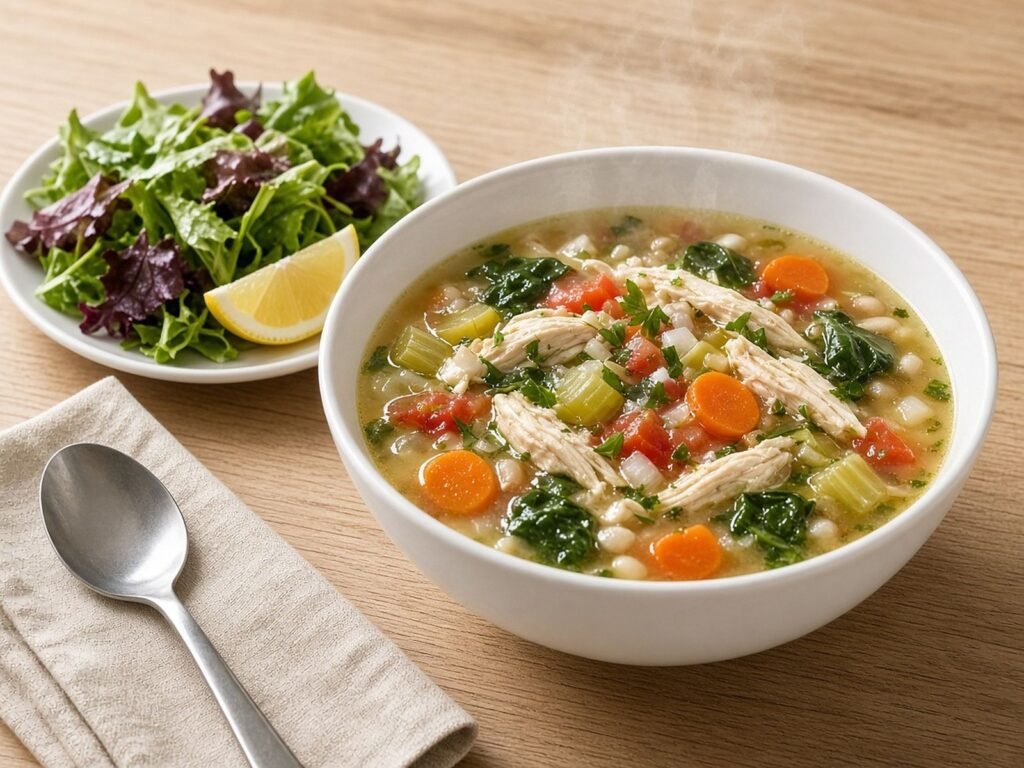
Dinner: Chicken Vegetable Soup
A broth-based soup packed with vegetables, leftover Day 1 chicken, and a modest scoop of white beans. About 35 minutes.
Serves 2 tonight, plus leftovers for tomorrow.
- The reserved leftover chicken, shredded (from Day 1)
- 1 tablespoon olive oil
- 1 yellow onion, diced
- 3 carrots, sliced
- 3 celery stalks, sliced
- 3 garlic cloves, minced
- 2 cartons (32 oz each) low-sodium chicken or vegetable broth, plus water if needed
- 1 can diced tomatoes (14.5 oz), no added sugar
- 1 can white beans, rinsed and drained
- 2 large handfuls spinach
- 1 teaspoon dried oregano
- Salt, black pepper, and lemon juice
- A side salad of mixed greens
- Optional: a small spoon of plain yogurt on top
Cook the onion, carrots, and celery in the oil until they soften. Add the garlic, then the broth, tomatoes, oregano, and beans. Simmer about 15 minutes. Stir in the chicken and spinach until the chicken is hot and the spinach wilts. Taste, and finish with lemon, salt, and pepper.
Ladle a generous bowl — vegetables and protein should dominate — with a modest share of the beans. Serve the salad on the side so the meal still looks like a Diabetes Plate. You do not need a large piece of bread. If you want a little something with it, half a slice of whole-wheat toast is enough.
Pack for later: Cool the remaining soup and refrigerate it for Day 5 lunch.
Snack: Cottage Cheese Berries
½ to ¾ cup plain cottage cheese with a small handful of berries. Water with it.
Inside Plate check: Protein from yogurt, fish, chicken, and cottage cheese; fiber-rich plants from oats, beans, and soup vegetables; color from berries, tomato, and greens; gut-friendly yogurt, oats, onion, garlic, and beans.
Day 5 — Colorful bean bowls
Suggested day: Friday
Eggs and greens in the morning, leftover soup at lunch, and a colorful bean-and-pepper bowl that already includes Saturday's lunch.
Breakfast: Eggs and Greens
Eggs with wilted spinach and tomato, one slice of toast, and optional yogurt on the side. About 15 minutes.
Serves 2.
- 4 eggs, fried, scrambled, or poached
- A large handful of spinach, wilted in a little olive oil
- 1 tomato, sliced, or a handful of cherry tomatoes
- ½ avocado, sliced (optional)
- 2 slices whole-wheat toast (one each)
- Optional: a small cup of plain Greek yogurt
Cook the eggs the way you like them. Wilt the spinach. Build each plate with the eggs, a pile of spinach and tomato, avocado if you are using it, and one slice of toast. The vegetables should take up plenty of space; the toast is the modest carb.
Lunch: Leftover Chicken Soup
Yesterday's soup, reheated until steaming, with a side of greens or cucumber. About 5 minutes to reheat.
Serves 2.
Reheat the soup until it is steaming hot. Add a squeeze of lemon and a side salad if you want more crunch. A small spoon of yogurt on top is welcome, just as it was last night.
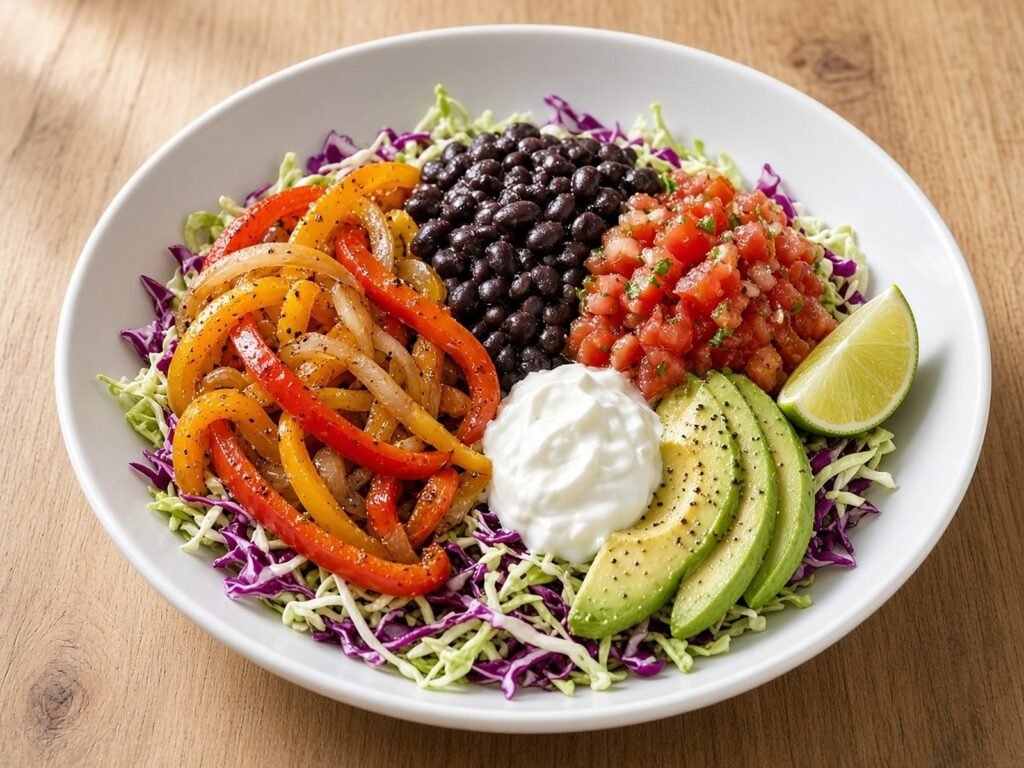
Dinner: Bean Pepper Bowls
Black beans and a rainbow of peppers over a big bed of cabbage, with salsa and yogurt. About 25 minutes.
Serves 2 tonight, plus leftovers for tomorrow.
- 2 cans black beans, rinsed and drained
- 3 bell peppers, sliced
- 1 yellow onion, sliced
- 2 garlic cloves, minced
- 1 tablespoon olive oil
- ½ teaspoon ground cumin
- ½ teaspoon paprika
- 3 to 4 cups shredded cabbage or coleslaw mix, tossed with lemon juice, a little olive oil, and a pinch of salt
- Mild salsa with no added sugar
- ½ avocado, sliced (optional)
- Plain unsweetened Greek yogurt
- Lime or lemon
- Optional: a small spoon of leftover brown rice — only if you keep it to a corner of the plate. The beans are already the quality carb.
Cook the onion and peppers in the oil until they soften and take on a little color. Add the garlic, cumin, and paprika. Stir in the beans until hot. Season with salt, pepper, and lime.
Build each bowl with a generous pile of cabbage (this is your half-plate of non-starchy vegetables), the pepper-and-onion mixture, a modest scoop of beans, salsa, avocado, and a spoon of yogurt. Do not fill the bowl with rice and beans together.
Pack for later: Refrigerate two portions, including extra cabbage, for Day 6 lunch.
Snack: Cucumber and Hummus
Cucumber spears with hummus. A glass of water.
Inside Plate check: Protein from eggs, leftover chicken, beans, and yogurt; fiber-rich plants from toast, beans, cabbage, and peppers; color from tomato, peppers, and salsa; gut-friendly yogurt, onion, garlic, and beans.
Day 6 — Frittata and lentil stew

Suggested day: Saturday
A weekend frittata, leftover bean bowls at lunch, and a pot of lentil stew that takes care of Sunday's lunch.
Breakfast: Veggie Frittata
A skillet frittata with peppers, spinach, and onion, with a side of yogurt and berries. About 25 minutes.
Serves 2, with a little left over if you want a spare slice.
- 6 eggs
- 1 bell pepper, diced
- 1 handful spinach
- ¼ yellow onion, diced
- 2 teaspoons olive oil
- Salt and black pepper
- 1 cup plain unsweetened Greek yogurt, divided
- 1 cup berries, divided
Heat the oven to 400°F (200°C) if your skillet is oven-safe, or finish the frittata on the lid. Cook the onion and pepper in the oil until soft, add the spinach, then pour in the beaten eggs. Cook until the edges set, then finish in the oven or under a lid until the center is just set. Serve a hearty slice with yogurt and berries. The berries and yogurt are your modest carb and extra protein; you do not need toast as well, unless you skip the berries and have one slice instead.
Lunch: Leftover Bean Bowls
Yesterday's bean and pepper bowls, cold or reheated, with fresh cabbage or greens if you have them. About 5 minutes.
Serves 2.
Refresh with lemon, salsa, and a spoon of yogurt. Check the plate: lots of cabbage and peppers, a modest scoop of beans, no extra rice piled on top.
Dinner: Lentil Vegetable Stew
A mild pot of lentils with carrots, tomatoes, onion, and spinach, and a big side of vegetables or salad. About 40 minutes, mostly simmering.
Serves 2 tonight, plus leftovers for tomorrow.
- 1½ cups dry brown or green lentils, rinsed
- 1 tablespoon olive oil
- 1 yellow onion, diced
- 3 carrots, sliced
- 3 garlic cloves, minced
- 2 cans diced tomatoes (14.5 oz each), no added sugar
- 1 carton (32 oz) low-sodium vegetable or chicken broth, plus water as needed
- 1 teaspoon ground cumin
- ½ teaspoon paprika
- 4 large handfuls spinach
- Salt, black pepper, and lemon juice
- A large side of steamed broccoli or a big green salad
- Plain yogurt for a dollop
- Optional: a small spoon of sauerkraut on the side
Cook the onion and carrots in the oil until they soften. Add the garlic, cumin, and paprika, then the lentils, tomatoes, and broth. Simmer, partly covered, until the lentils are tender, about 25 to 30 minutes. Add water if it gets too thick. Stir in the spinach, and finish with lemon, salt, and pepper.
Lentils are both protein and a quality carb, so give them a quarter to a half of the bowl and let the side of broccoli or salad fill the rest. A yogurt dollop adds a gut-friendly finish. You do not need bread on the side.
Pack for later: Cool the remaining stew and refrigerate it for Day 7 lunch.
Snack: Apple Peanut Butter
One small-to-medium apple with a tablespoon of natural peanut butter. Water with it.
Inside Plate check: Protein from eggs, beans, lentils, and yogurt; fiber-rich plants from lentils, cabbage, vegetables, and fruit; color from peppers, berries, tomatoes, and greens; gut-friendly yogurt, onion, garlic, and lentils.
Day 7 — Leftover stew and easy salmon
Suggested day: Sunday
A simple omelet, leftover stew at lunch, and an easy herb-salmon supper to close the week — without another big pot of leftovers.
Breakfast: Veggie Omelet
A two-egg omelet with spinach and tomato, one slice of toast, and a little fruit. About 15 minutes.
Serves 2.
- 4 eggs
- A large handful of spinach
- 1 tomato, sliced, or a handful of cherry tomatoes
- 2 teaspoons olive oil
- 2 slices whole-wheat toast (one each)
- Fruit: a small orange, or a handful of berries
- Optional: a few spoonfuls of plain yogurt
Cook two omelets (or one large one, split) with the spinach wilted in. Serve with tomato, one slice of toast, and the fruit. If the fruit is more than a small handful, skip the toast, or skip the fruit and keep the toast — so the quality-carb quarter does not get served twice.
Lunch: Leftover Lentil Stew
Yesterday's stew, reheated until steaming, with a fresh side of greens or leftover broccoli. About 5 minutes to reheat.
Serves 2.
Reheat until steaming hot. Add lemon, a dollop of yogurt, and extra vegetables on the side. No bread needed.
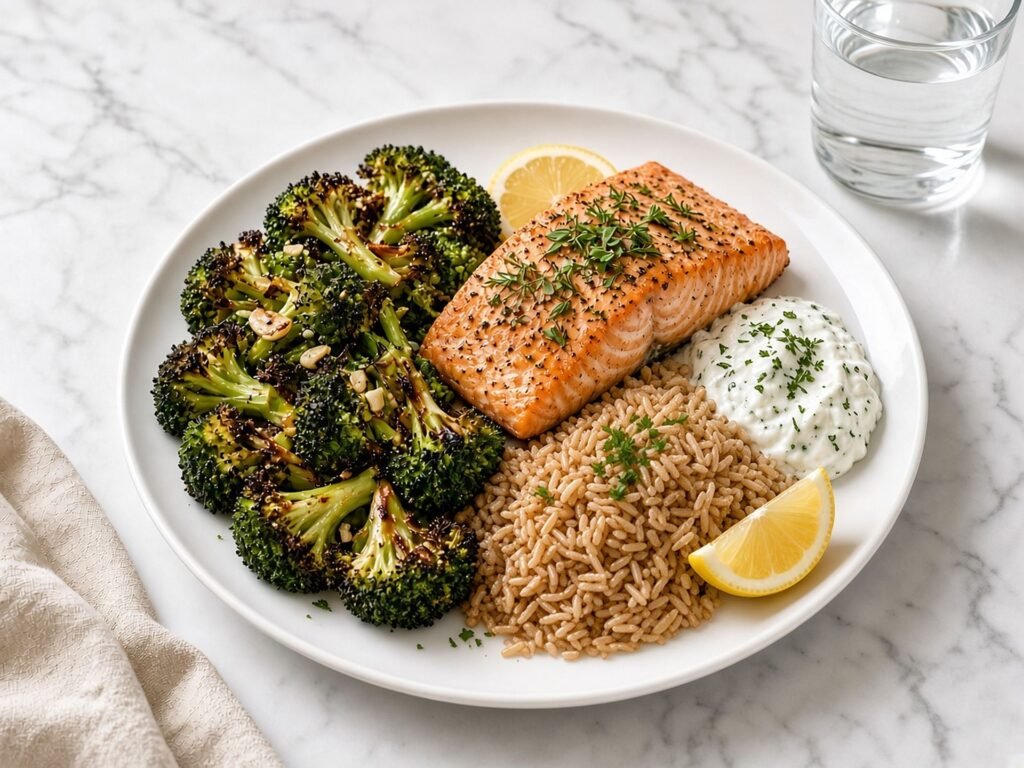
Dinner: Herb Salmon Plate
Salmon with a half-plate of broccoli, and a quarter-plate of leftover brown rice or an extra pile of vegetables. About 20 minutes.
Serves 2.
- 1 lb salmon, or any mild white fish
- 1 large head broccoli, cut into florets (or a large bag of frozen broccoli)
- 1 tablespoon olive oil
- 1 lemon
- 1 garlic clove, minced
- Salt, black pepper, and dried oregano or dill
- Yogurt-herb sauce, if any remains, or plain yogurt with lemon and herbs
- Optional: a quarter-plate of leftover brown rice, or skip the rice and add more broccoli
- Optional: a small spoon of sauerkraut or kimchi on the side
Heat the oven to 425°F (220°C), or cook on the stove in a covered pan. Toss the broccoli with most of the oil, garlic, salt, and pepper, and roast about 10 minutes. Add the salmon, rubbed with the remaining oil, lemon, oregano, salt, and pepper. Roast another 10 to 12 minutes, until the salmon flakes and the broccoli is tender, with browned edges.
Fill half the plate with broccoli, a quarter with salmon, and a quarter with rice or still more vegetables. Finish with yogurt sauce and lemon.
Snack: Yogurt and Berries
A small cup of plain unsweetened Greek yogurt with a handful of berries, or leftover fruit and a few nuts.
Inside Plate check: Protein from eggs, lentils, salmon, and yogurt; fiber-rich plants from toast, lentils, broccoli, and fruit; color from tomato, berries, and greens; gut-friendly yogurt, leftover onion and garlic in the stew, and an optional spoon of sauerkraut.
Combined grocery list
This list is for 2 people for 7 days. It assumes you will use the leftovers as written. Before you shop, check your pantry, fridge, and freezer. You may already have oats, brown rice, spices, peanut butter, or frozen berries.
Choose plain, unsweetened yogurt and milk, natural peanut butter with no added sugar, salsa with no added sugar, and low-sodium broth when you can. Rinse canned beans.
Produce
- Yellow onions, 8 medium
- Garlic, 2 heads
- Carrots, one 2 to 3 lb bag
- Celery, 1 bunch
- Zucchini, 6 medium
- Bell peppers, 8 mixed colors
- Cucumbers, 4
- Tomatoes, 6 medium, or 2 pints cherry tomatoes
- Baby spinach, 2 large clamshells (about 16 to 20 oz total)
- Mixed salad greens, 2 bags
- Broccoli, 3 large heads, or 2 heads plus 1 large frozen bag
- Green beans, 1½ lb
- Green cabbage, 1 small, or 1 bag coleslaw mix
- Sweet potatoes, 2 medium
- Lemons, 6, plus 2 limes if you like them on the bean bowls
- Avocados, 2 (optional)
- Fresh parsley, 1 bunch
- Fresh dill, 1 bunch (optional; extra parsley is fine)
- Apples, 4 to 6 small-to-medium
- Oranges, 2 (optional, for the Day 7 breakfast)
- Fresh berries, 1 pint (optional if you are buying frozen)
- Banana, 1 (optional, for a few slices on the oat bowl)
Protein
- Boneless chicken thighs or breasts, 3 lb
- Ground turkey, 1 lb
- Salmon or any mild white fish for midweek, 1½ lb (Day 3 dinner and Day 4 lunch)
- Salmon or mild white fish for Day 7, 1 lb
- Eggs, 2 dozen
- Canned tuna in water, 2 cans (5 oz each)
Dairy and fermented
- Plain unsweetened Greek yogurt, 2 to 3 large 32 oz tubs
- Plain cottage cheese, 1 tub (16 oz)
- Unsweetened milk or unsweetened dairy-free milk, 1 quart (for oats)
- Sauerkraut or kimchi, 1 small jar (optional)
- Hummus, 1 tub (about 10 oz), or make a simple version from a can of chickpeas
Grains and pantry
- Rolled oats, 18 oz
- Brown rice, 1 lb bag (you will cook a modest pot, not a large one)
- Whole-wheat bread, 1 loaf (look for whole-wheat flour as the first ingredient)
- Brown or green lentils, 1 lb dry
- Canned diced tomatoes, 3 cans (14.5 oz), no added sugar
- Canned cannellini or other white beans, 2 cans
- Canned black beans, 2 cans
- Canned chickpeas, 1 can (optional, for extra hummus or a vegetarian swap)
- Low-sodium chicken or vegetable broth, 3 cartons (32 oz each)
- Natural peanut butter with no added sugar, 1 jar
- Almonds or mixed nuts, 8 oz
- Mild salsa with no added sugar, 1 jar
- Olive oil, salt, black pepper, dried oregano, paprika, ground cumin, and cinnamon
Frozen
- Frozen blueberries or mixed berries, 2 bags (10 to 16 oz each)
- Frozen broccoli or green beans, if fresh produce is expensive this week
- Frozen fish, if you did not buy it fresh
How to scale this list
- For 1 person: Halve the grocery quantities. For the soup, stew, and turkey skillet, you can still cook the full batch and freeze half in single portions for the following week.
- For 4 people: Double the list. Use two sheet pans on Day 1 and Day 3. Soups, stews, and skillets double easily in a larger pot.
- If your budget is tight this week: Choose chicken thighs over breasts, frozen fish over fresh salmon, frozen berries over fresh, and skip the avocado and fresh herbs. Frozen vegetables work in every cooked meal. The plan still holds.
Sunday prep (30 to 60 minutes)
Do this the day before you start, or first thing on Day 1 if that is easier. You are not cooking the whole week. You are making weeknights smaller.
- Cook a modest pot of brown rice. Make 1 cup dry brown rice (about 3 cups cooked). Cool it, then refrigerate it in a covered container. This covers Day 1 dinner, Day 2 lunch, and an optional quarter-plate on Day 7. You do not need a second large pot.
- Make the yogurt-herb sauce. Stir together 1 cup plain unsweetened Greek yogurt, the juice of ½ lemon, a pinch of salt, a small grated garlic clove or a pinch of garlic powder, and chopped parsley or dill. Thin it with a splash of water. It keeps about 4 days.
- Mix a simple lemon dressing. In a jar, combine ¼ cup olive oil, the juice of 1 lemon, and a pinch of salt. This covers side salads all week.
- Chop the first wave of vegetables. Cut carrots, celery, and onions for the soup and skillet. Leave the Day 1 sheet-pan vegetables until you cook, if you prefer them fresher, or cut them now and save 10 minutes on Monday.
- Wash greens and fruit. Dry the greens so they last. Keep berries in the fridge, or use frozen.
- Cut snack vegetables. Carrot, celery, and cucumber sticks, stored in water or a sealed container, make the hummus and peanut-butter snacks automatic.
- Mix Day 4's overnight oats the night before you need them, not today. Oats keep well overnight, not for four days.
If you only have 30 minutes, do steps 1, 2, 5, and 6. That is enough.
Prep tips through the week
- Leftovers are part of the recipe. Cool food within 2 hours, refrigerate it in covered containers, and eat it within 3 to 4 days. Reheat leftovers until they are steaming hot. Do not leave cooked rice sitting out on the counter.
- Keep the plate in view. When you reheat leftovers, start by filling half the plate with vegetables, then add the protein, then a modest carb. It is easy for rice, beans, or sweet potato to spread if you are not looking.
- Beans and lentils already count as your quality carb. If a meal has a real portion of them, you usually do not need rice or bread as well.
- Keep a water bottle in sight. As oats, beans, and lentils show up more, water should too. If you want a longer read on this habit, see common signs you may not be drinking enough water.
- Fermented foods are optional toppings, not a test. A teaspoon of sauerkraut or kimchi is plenty if they are new to you.
- Repeat what works. If the lemon-chicken tray was the easiest night, make it again next week and change only the vegetables.
For more on the building blocks of this plan, you can also read Inside Diet guides to fiber, protein, and walking.
Easy swaps
Use these whenever you need them. The Diabetes Plate and the Inside Plate still stand if the protein, the plants, and the gut-friendly food change.
Vegetarian
- Swap the Day 1 chicken for extra-firm tofu, or for two cans of chickpeas tossed with the same lemon, garlic, and oil and roasted until golden. Make a full tray so you still have leftovers for Day 2 lunch. Use vegetable broth, and add extra beans or tofu to the Day 4 soup.
- Swap ground turkey for 1 lb crumbled extra-firm tofu or a second can of white beans plus cooked lentils.
- Swap fish for tofu, chickpeas, or a double portion of roasted vegetables with a fried egg or yogurt-herb sauce for protein. Remember that beans and chickpeas already count toward the carb quarter.
- Swap tuna for mashed chickpeas, using the same yogurt-lemon dressing.
- For Day 7, a tofu or chickpea tray with broccoli works in place of salmon.
Dairy-free
- Use unsweetened soy, almond, or coconut yogurt in bowls, sauces, and dollops. Choose a plain one with no added sugar. Soy yogurt is usually the higher-protein choice.
- Use olive oil and lemon in place of yogurt sauce if you prefer.
- Use unsweetened dairy-free milk in oatmeal and overnight oats.
- Swap cottage cheese for a dairy-free yogurt, extra hummus, or a small handful of nuts.
Gluten-free
- Choose certified gluten-free oats.
- The rest of the plan — eggs, chicken, fish, beans, lentils, yogurt, rice, vegetables, and fruit — is naturally gluten-free. Check broth, salsa, and hummus labels if you need them to be gluten-free.
- If you need a toast swap, use a gluten-free whole-grain slice, or skip the toast and add extra vegetables and a few more berries or a small serving of leftover rice.
Budget
- Chicken thighs instead of breasts, frozen fish instead of fresh salmon, frozen berries instead of fresh, and frozen broccoli instead of extra fresh heads.
- Canned tuna and eggs are already among the lower-cost proteins in the plan.
- Skip avocado, fresh herbs, and kefir or sauerkraut if they are not in the budget. Onion, garlic, oats, and beans still cover the gut-friendly part of the Inside Plate.
Other easy trades
- Any mild white fish can stand in for salmon.
- Chicken and turkey can stand in for each other.
- Frozen vegetables can replace fresh ones in soups, skillets, and sheet pans.
- If you do not eat peanuts, use almond butter or hummus.
- If apples do not sit well, use carrot sticks, cucumber, or a small handful of berries with the same protein.
Keep going with the plate
When this week is over, you do not need a new set of rules. You need a way to build the next meal — at home, from leftovers, or from whatever is in the fridge.
Start with a 9-inch plate. Fill half with non-starchy vegetables, a quarter with lean protein, and a quarter with a quality carb. Then run the Inside Plate check: protein, fiber-rich plants, color, and one gut-friendly food.
Read The Inside Plate for the everyday method, including simple restaurant and takeout orders. For the thinking behind this week of meals, read How to Manage Diabetes with Food.
If this week helped, start the next one the same way: one grocery list, a little Sunday prep, and meals that leave tomorrow's lunch already made.
This meal plan is for education and general information only. It is not medical advice, and it is not meant to diagnose, treat, cure, or prevent diabetes or any other condition.
Talk with your doctor, or with a registered dietitian or diabetes care and education specialist, before you change how you eat. If you take insulin or a sulfonylurea (or another medicine that can lower blood sugar), eating fewer carbohydrates than usual can cause hypoglycemia (low blood sugar). Check your blood sugar as your care team has taught you, and follow their plan if it runs low.
Medical disclaimer
The content on Inside Diet, including this meal plan, is for education and general information only. It is not medical advice, and it is not intended to diagnose, treat, cure, or prevent any disease or condition.
Food needs vary from person to person. Please talk with your doctor, or with a registered dietitian or a diabetes care and education specialist, before you change your diet, start this plan, or start a supplement — especially if you take diabetes medication or insulin.
Eating fewer carbohydrates than you usually do, skipping or delaying a meal, or adding more physical activity can cause low blood sugar (hypoglycemia), particularly if you take insulin or certain other diabetes medicines, such as sulfonylureas. For many people, low blood sugar means a reading below 70 mg/dL, but your number may be different; ask your care team what is low for you.
Signs of low blood sugar can come on quickly and may include feeling shaky, sweaty, or clammy; a fast heartbeat; feeling nervous, anxious, irritable, or confused; dizziness or lightheadedness; hunger; weakness; blurred vision; a headache; or tingling in the lips, tongue, or cheeks. Severe low blood sugar can cause seizures or loss of consciousness and needs urgent help. Follow your care team's plan for checking and treating low blood sugar. The only sure way to know is to check, as your provider advises.
Check your blood sugar as your health care provider has advised, especially when you change what you eat or how active you are. If you have symptoms that worry you, or a low you cannot bring up as your care team taught you, seek medical care.
If you have food allergies or intolerances, if you are pregnant or breastfeeding, or if you have a condition that requires a special diet, this plan may not be right for you without personal advice.
Sources
This plan follows publicly available guidance from the following organizations. It is not a personal treatment plan.
- American Diabetes Association, Eating Well & Managing Diabetes and Eating for Diabetes Management
- American Diabetes Association, Signs, Symptoms, and Treatment for Hypoglycemia
- Centers for Disease Control and Prevention, Diabetes Meal Planning, Choosing Healthy Carbs, Fiber, and Carb Counting
- National Institute of Diabetes and Digestive and Kidney Diseases, Healthy Living with Diabetes and Low Blood Glucose (Hypoglycemia)
